Healthy Tooth Structure Stays Intact
SDF is applied directly to the decayed area without removing the surrounding healthy tooth structure. Our doctors will examine the cavity first to decide whether this approach makes sense for the tooth.


A cavity needs attention, but caring for it does not always require a filling at the first visit. At Kids Tooth Team Michigan, SDF treatment gives our board-certified pediatric dentists a way to manage certain cavities with a quick, brush-on application. We’ll examine your child’s tooth, explain what the treatment can accomplish, and make a plan to monitor it at our Lake Orion or Fenton office.


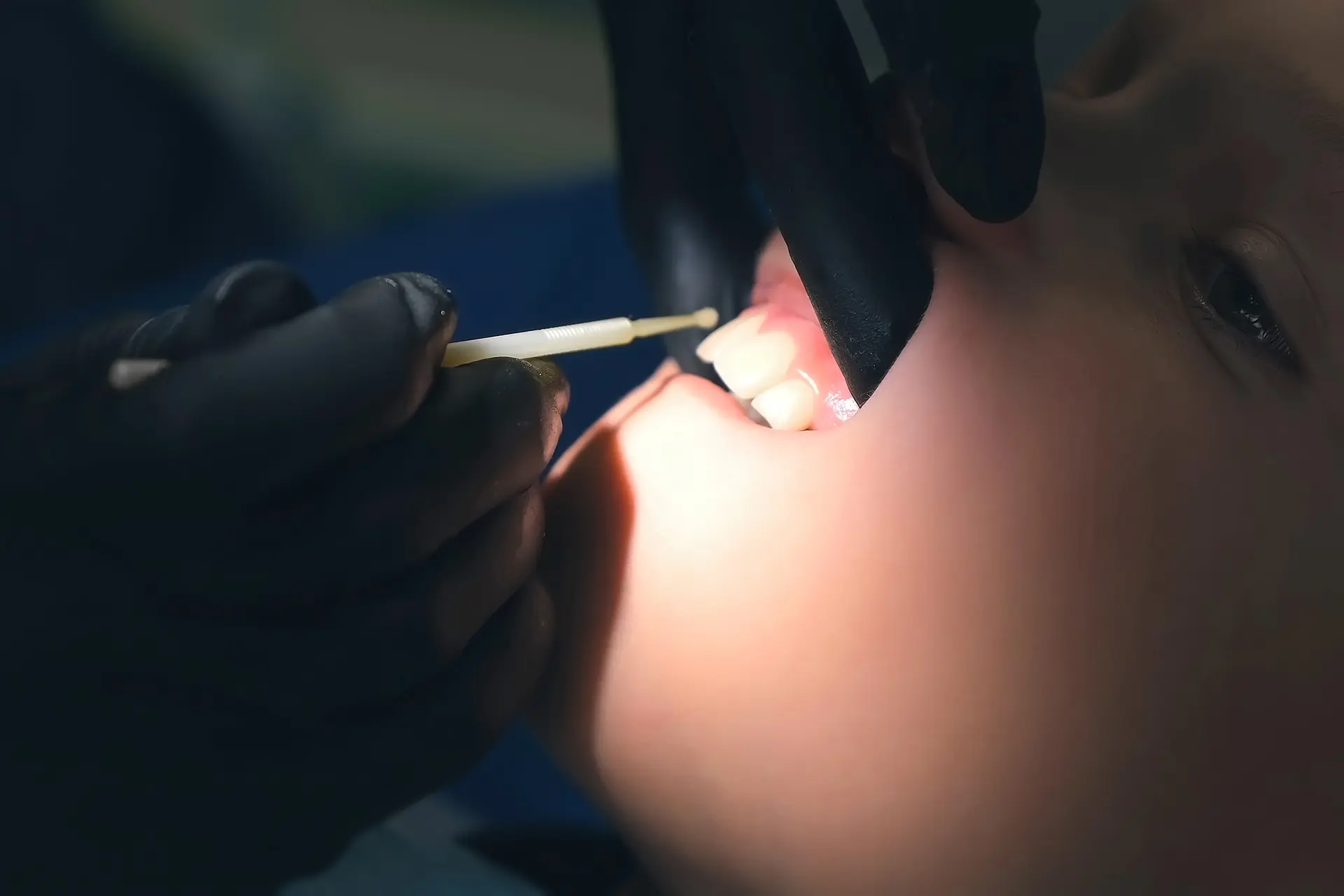
SDF treatment involves brushing a liquid called silver diamine fluoride onto a cavity to help slow or stop the decay. The application is quick and does not require drilling or numbing, which can make the visit easier for young children.
SDF does not fill a cavity or restore the tooth’s shape. The decayed area will darken permanently, and our doctors will check the tooth at future visits. Another SDF application, a filling, or other treatment may still be needed. We’ll also look at your child’s overall oral health and discuss any other care that may be helpful as part of their treatment plan.

SDF is applied directly to the decayed area without removing the surrounding healthy tooth structure. Our doctors will examine the cavity first to decide whether this approach makes sense for the tooth.
The liquid is placed with a small brush, so the SDF application itself does not require a drill or numbing injection. That can make the appointment more manageable for children who find longer procedures difficult.
We’ll continue to examine the treated tooth at your child’s checkups. If the decay continues to progress or the tooth needs its shape restored, we’ll discuss the next treatment with you.
SDF is applied directly to the decayed area without removing the surrounding healthy tooth structure. Our doctors will examine the cavity first to decide whether this approach makes sense for the tooth.
The liquid is placed with a small brush, so the SDF application itself does not require a drill or numbing injection. That can make the appointment more manageable for children who find longer procedures difficult.
We’ll continue to examine the treated tooth at your child’s checkups. If the decay continues to progress or the tooth needs its shape restored, we’ll discuss the next treatment with you.
At Kids Tooth Team Michigan, we look at what each tooth needs. SDF can help manage an existing cavity, while other treatments may help us address early enamel changes or reduce the bacteria that contribute to decay. Your child’s dentist will recommend options based on their exam and cavity risk.

Curodont is designed for early-stage decay, including white spot lesions that have not developed into open cavities. The treatment is applied to the affected area and helps minerals reach the weakened enamel. Our doctors may recommend it after examining the tooth, then assess the area at routine visits.
Povi-One contains povidone-iodine, an antiseptic that helps reduce bacteria associated with tooth decay. It may be useful as part of a preventive plan for a child with a higher cavity risk. Our doctors will explain whether it fits your child’s needs and how it works alongside daily oral care and checkups.
Sample text is being used as a placeholder. Sample text helps you understand how real text may look. Sample text is being used as a placeholder for real text that is normally present. Sample text helps you understand how real text may look. Sample text is being used as a placeholder for real text that is normally present. Sample text is being used as a placeholder for real text that is normally present.
One of our pediatric dentists will examine the tooth and review your child’s options. If we recommend SDF, we’ll explain the permanent darkening of the decayed area and how we plan to monitor the tooth.
We’ll prepare the affected tooth and brush a small amount of SDF onto the cavity. There is no drilling or numbing injection needed for this application.
At future visits, we’ll check whether the decay has stopped progressing. Depending on what we find, we may recommend another application or further treatment, such as a filling.
Give us a call to chat with one of our friendly team members!
No. A filling replaces missing tooth structure and restores the tooth’s shape. SDF is applied to the area of decay to help slow or stop its progression. We’ll keep monitoring the tooth and recommend a filling or other care if it becomes necessary.
The decayed area treated with SDF can turn dark brown or black, and that color change is permanent. We’ll show you which part of the tooth is affected before treatment so you can make an informed decision.
That depends on how the tooth responds. Our doctors will check it at follow-up visits and let you know whether another application or a different treatment is needed.
SDF can be used to manage decay in both baby and permanent teeth. We’ll examine the affected tooth and discuss the treatment plan that fits your child’s situation.
Yes. Follow-up visits allow us to see whether the treated cavity has stopped progressing and whether the tooth needs more care. They also give us a chance to spot new concerns early.
Help your child brush twice a day with fluoride toothpaste, floss daily, and limit frequent sugary snacks and drinks. At their regular visits, we can recommend preventive care such as fluoride treatments or dental sealants based on their needs.
Give us a call to chat with one of our friendly team members!