



baby laughing

Infant Dentist in Lake Orion, MI

curly blue line

Safeguarding Little Smiles

Seeing a dentist from a very young age allows your child to become more familiar with the process, allows them to get personalized care, and helps encourage a better attitude toward dentistry as your child ages and grows. At Kids Tooth Team, we provide gentle pediatric care for kids of all ages, including infants. Contact us to schedule a consultation at our Lake Orion office!

When Should My Infant See The Dentist?

Bringing an infant to the dentist may seem strange, since infant children typically don’t have most of their teeth. But did you know that the American Academy of Pediatric Dentistry (AAPD) recommends that infants see the dentist when they turn 1, or within 3 months of getting their first tooth?

At Kids Tooth Team, we provide gentle care for young kids. With a “lap exam,” you’ll hold your infant child on your lap as one of our dentists cleans their teeth and gums and assesses their oral health. 

After your child’s consultation, you can discuss your child’s oral health with their doctor, ask any questions you may have about their oral development, and get all the information you need to care for their smile as they grow.

hugging tooth icon illustration

Signs Of Teething & What You Should Do

Most infants begin to get their first tooth around 6 months of age, though it may take longer for some kids. Common signs of teething include irritability, disrupted sleep, inflammation and swelling of the gums, drooling, and a rash around the mouth. 

You don’t need to do anything special to deal with teething. If your child is very uncomfortable and cranky, you can soothe their gums by rubbing them with a clean finger or cold washcloth, or rubbing a cold spoon on their gums. 

Teething rings, which are usually made of soft silicone, can also allow your child to bite and put pressure on their teeth and gums, which helps with the discomfort of teething.

a boy on the swings
blue cowboy hatlittle boy flexing his muscles and smiling

Ahoy Matey!

We love welcoming patients! If you’re planning your first visit, be sure to take advantage of our new patient special. With a free second opinion consultation, we’ll make sure your little one gets started off on the right foot at our office.

Get the Details
KTT tooth icon

Caring For Your Infant’s Teeth & Gums

When your child doesn’t have any teeth, you simply need to wipe their gums with a clean washcloth after they feed. Once your child gets their first tooth, you should clean it with a grain-of-rice-sized dab of toothpaste on a soft-bristled baby toothbrush, and continue to do so as their other teeth emerge.

You should brush your infant’s teeth and gums at least twice per day, ideally once in the morning and once at night after their final feeding. This is the best way to keep their teeth and gums healthy.

curly blue line

Avoiding Problems With Infant Teeth & Gums

As long as you maintain proper at-home oral care, feed your infant a healthy diet, and see one of our dentists for a six-month teeth cleaning and oral exam, you will be able to avoid common problems like tooth decay and plaque buildup on the gums. So make sure to follow the doctor's instructions to care for your child’s mouth, and be consistent about oral care for your infant as they grow.

curly blue line
KTT tooth icon

Frequently Asked Questions

curly blue line
https://twitter.com/mattimshy/status/1268249013138026497?s=21

Is it normal for my baby’s gums to bleed when their teeth are coming in?

Yes, it is generally normal for a baby’s gums to bleed a little during teething. Teething is a natural process, but it can be uncomfortable for babies and sometimes alarming for parents who aren’t sure what to expect. When baby teeth (also known as primary teeth) begin to erupt through the gums around six months of age, the pressure and movement beneath the gumline can cause minor irritation. In many cases, this leads to mild inflammation and, occasionally, a small amount of bleeding.

This bleeding often happens when a baby is chewing on something firm, like a teething toy or a silicone teether, which can apply additional pressure to the gums. The friction helps soothe sore gums, but it can also cause slight trauma to the gum tissue. If you notice a little blood on a toy, bib, or during brushing, don’t panic. It’s likely a normal part of the teething process.

However, it's important to be observant. If the bleeding appears heavy, is frequent, or is accompanied by other concerning symptoms such as significant swelling, a foul smell, pus, or a fever, it could be a sign of something more serious, like an infection. In those cases, it’s a good idea to consult a pediatric dentist to rule out any underlying issues and ensure your baby's mouth is healthy.

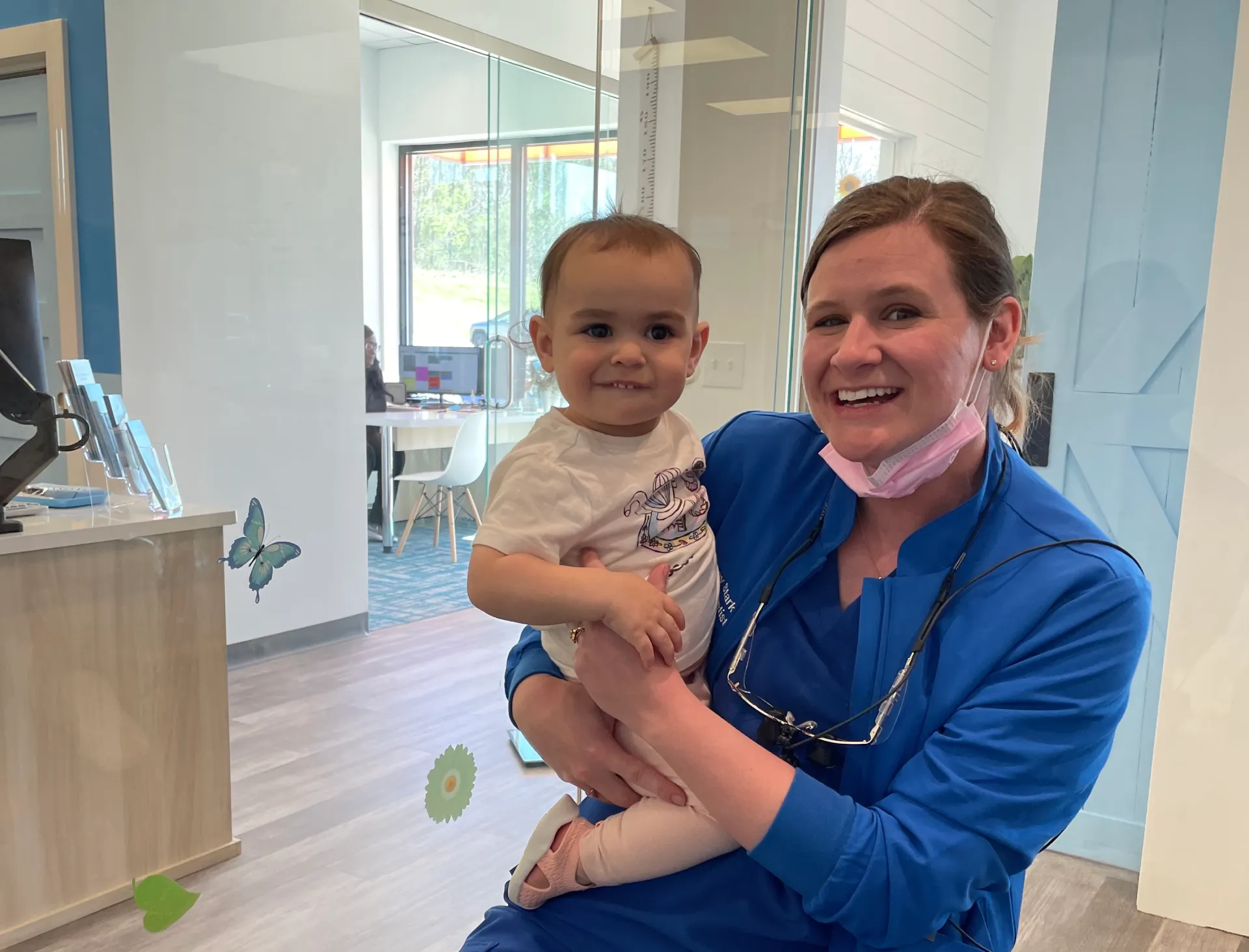
At Kids Tooth Team in Michigan, Dr. Kasey Stark specializes in gentle, preventive-focused pediatric care. She can assess your baby’s oral development and offer expert guidance to help soothe discomfort, monitor progress, and provide peace of mind. We believe in minimally invasive dentistry, so if your baby’s symptoms are within the range of normal, we’ll keep things easy and non-invasive while making sure your child stays comfortable and happy.

arrow icon

What should I do if my infant resists tooth brushing?

It’s very common for infants to resist brushing in the early stages. You’re definitely not alone. Brushing is a new experience for your baby. Like anything unfamiliar, it may take time for them to get used to it. The key is to remain patient and consistent while gradually turning brushing into a positive and playful part of their daily routine.

Start by using a soft-bristled toothbrush designed for infants. These brushes are gentle on tender gums and small enough to maneuver comfortably. Begin brushing as soon as the first tooth appears. Even before teeth erupt, you can clean your baby’s gums with a soft, damp cloth or a silicone finger brush to introduce the sensation of oral care.

To make brushing more enjoyable for your baby, try incorporating fun elements. Sing a favorite song, use a playful voice, or let your child hold a second toothbrush to feel involved. Some parents even tell short stories or make up characters to create excitement around brushing. The more relaxed and positive the experience, the more likely your child will become receptive over time.

If your baby has sensory sensitivities or special healthcare needs, brushing might present additional challenges. That’s perfectly okay. Dr. Stark has advanced training in special needs dentistry and is experienced in helping families build customized routines that work with their child’s specific needs and comfort levels. Whether your child is overly sensitive to touch or struggles with transitions, we can offer practical, compassionate advice to help oral care become manageable and even fun at home.

Remember, building good habits early on makes a big difference. Establishing a twice-daily brushing routine from infancy lays the foundation for a lifetime of healthy smiles. If you ever need help finding the right toothbrush, technique, or brushing strategies, our team at Kids Tooth Team is here to guide and support you every step of the way.

arrow icon

How can I protect my baby’s teeth if they fall asleep with a bottle?

It’s very common for babies to fall asleep while feeding, especially during nighttime bottles or nursing sessions. While this may seem harmless or even helpful for soothing your baby to sleep, there are some oral health concerns that parents should be aware of.

When babies fall asleep with a bottle filled with milk or formula, the sugars in these liquids can linger in their mouths. During sleep, saliva production slows down, which means there’s less natural rinsing action to wash those sugars away. As a result, the sugars remain on the surface of the teeth and gums, feeding bacteria that produce acid and lead to tooth decay. This condition is known as “baby bottle tooth decay” or early childhood caries.

The good news is that this type of tooth decay is completely preventable. As long as you do not put your child to bed with a bottle (unless it’s only water), you will not have to worry about baby bottle tooth decay. Additionally, make it a habit to clean your baby’s gums or teeth after their last feeding and before bedtime. Even a quick wipe with a damp cloth can help remove residue and lower the risk of decay.

arrow icon

When should I start using toothpaste for my infant?

You can begin using toothpaste as soon as your baby’s first tooth appears, which is typically around six months of age. It’s important to use a fluoride toothpaste from the very beginning because fluoride helps strengthen tooth enamel and prevent cavities.

At this stage, use only a tiny smear of toothpaste, about the size of a grain of rice. This small amount is safe even if your baby swallows it, which is common at this age. Brush twice a day using a soft-bristled infant toothbrush, focusing on cleaning all visible tooth surfaces and gently massaging the gums.

As your child grows and becomes more familiar with the brushing routine, you can gradually increase the amount of toothpaste. Around age three, most children can start using a pea-sized amount of fluoride toothpaste, and at that point, you can begin teaching them how to spit out the excess.

Dr. Kasey Stark and our team at Kids Tooth Team are here to help you through every stage of your child’s oral health journey. From selecting the right toothbrush and toothpaste flavors to offering safe, comforting in-office care, we make dental health approachable and fun for kids. And if your child is nervous or has trouble sitting still during visits, we offer safe, age-appropriate sedation options to make the experience smooth and positive for everyone.

curly blue line

Is Your Kiddo Due for a Visit?

Set Sail & Schedule an Appointment Today!

Book an appointment online
kids playing tug of war